

What if the most useful thing you can do before solar installation isn’t touching a tool, but gathering a few details about your home? Preparing for solar panel installation is mainly about helping your installer understand your household, roof and daily energy use, then making space for the crew to work safely.
It’s natural to wonder whether your roof or switchboard needs attention, and what you should move before installation day. You don’t need to work out the technical details alone. A well-planned system starts with understanding the home, while your installer guides you through matters such as Western Power connection approval and meter arrangements.
This checklist will help you get useful household information ready, spot roof and electrical concerns to discuss, and organise access around your Perth home. You’ll also see what to clear or arrange for installation day, and which network and technical steps belong with the installer. A little preparation can make the process feel calmer for your household and the crew.
Key Takeaways
- Preparing for solar panel installation starts with sharing useful details about your home and household, not designing the system yourself.
- Note visible shade, access limitations and known roof concerns from the ground; leave roof inspections to the professionals.
- Share relevant property and electrical information, while the installation team handles technical checks and Western Power connection requirements.
- Before installation day, make access straightforward and let your household know what to expect.
- SolarGrid Perth tailors residential solar installations to each Perth home, using your property details to guide the planning.
Preparing for solar panel installation: what to organise first
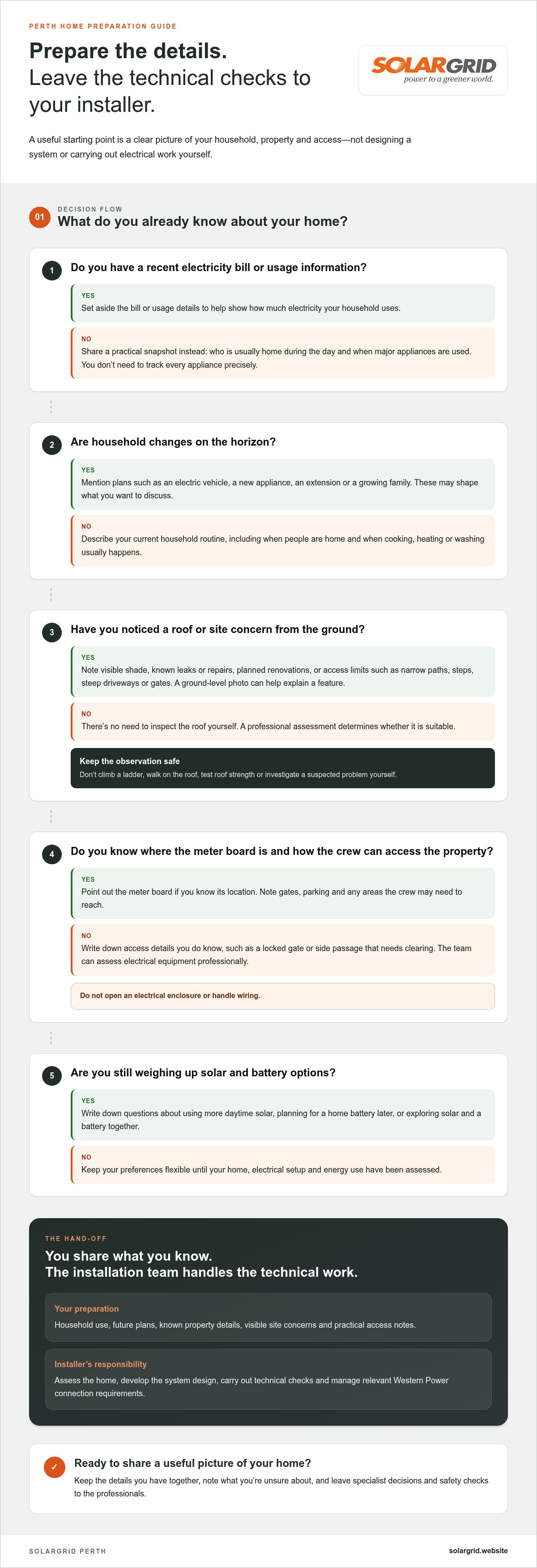
Getting ready for solar doesn’t mean you need to design a system or understand electrical work. The most helpful first step is simpler: share a clear picture of how your household uses electricity and make it easy for the installation team to understand the property. A few notes and useful documents can make planning more specific to your home.
Start with information that’s already to hand. You don’t need to create a detailed energy audit or inspect the roof yourself. Keep these basics together:
- A recent electricity bill or available usage information.
- A rough picture of who is usually home during the day and when major appliances are used.
- Any known property details, such as previous roof repairs or access limitations.
- Household changes on the horizon, such as an electric vehicle, a new appliance or a growing family.
- Practical access notes, including gates, parking and areas the crew may need to reach.
These details help the installer understand your home before assessing the system. For a general overview of how rooftop solar power systems connect panels and household equipment, you can also explore this introductory reference.
What household information should you have ready?
If recent bills are easy to find, set aside a few. They can help show how much electricity the household uses across different periods. Add a note about your daily rhythm: perhaps someone works from home, the washing machine usually runs in the afternoon, or cooking and heating are used most often in the evening. There’s no need to track every appliance precisely. A practical snapshot is enough to start a useful conversation.
Think beyond current routines, too. If you’re considering an electric vehicle, changing major appliances or extending your home, mention it. Future plans may shape what you want to discuss, even if they’re not happening straight away.
What decisions are useful to think about early?
Consider what you’d like solar to support. Is your main interest using more of the energy your panels produce during the day, planning for home battery storage later, or exploring solar and a battery together? There’s no need to settle on a system before the home and household use have been assessed.
Write down questions rather than trying to choose technical components yourself. You might want to understand how a solar-only setup compares with a solar-and-battery arrangement for your household’s routines. Keeping your preferences flexible leaves room for a tailored recommendation based on the roof, electrical setup and energy use.
Leave the technical checks to the installation team. They assess the home, develop the system design and manage the relevant Western Power connection requirements. Network requirements govern how a system connects to the local grid; Australian installation safety standards address how the equipment is designed and installed safely. Your role is to share useful information and flag concerns, not to interpret technical rules or carry out electrical work.
That’s a sound starting point for preparing for solar panel installation: gather what you know, note what you’re unsure about, and leave the specialist decisions to the professionals.
Check your Perth home and roof before solar panel installation
A little observation from the ground can help the installation team understand the site before assessing it. You don’t need to climb a ladder, walk on the roof or inspect building materials yourself. Preparing for solar panel installation means sharing what you already know, not diagnosing whether the roof is suitable. A professional assessment determines that.
Look around from a safe spot in your yard or at the front of the house. Note where shade falls, whether access looks restricted and any roof issues you’ve noticed over time. If a clear photo helps explain a feature, take it from ground level and share it with your property notes. Photos are context, not a substitute for an on-site assessment.
Which roof and site details are useful to mention?
Think about what might affect access or the view of your roof. Trees, nearby buildings and other structures may cast shade at different times of day. You don’t need to measure it; simply describe what you’ve observed and roughly when the area seems shaded. The Australian Government Solar Consumer Guide also provides an overview of rooftop assessments and the household solar installation process.
Include any known history that could be useful, such as a past leak, roof repairs or renovation work you’re planning. Mention narrow side paths, steep driveways, steps or a gate that needs to be opened. These small details help the team plan how to approach the property. Don’t try to test roof strength or investigate a suspected problem yourself.
- Visible trees, buildings or other sources of shade.
- Known roof repairs, leaks or planned renovation work.
- Narrow access routes, steep driveways, steps or gates.
- Ground-level photos that clearly show a relevant feature.
What should you note about household access?
Point out where the meter board is, if you know, and describe any areas that may be considered for equipment. Don’t open an electrical enclosure or handle wiring. The location and condition of electrical equipment are matters for the professional assessment, but a simple description can help the team find it on arrival.
Think through access inside and outside. Are there locked gates, a side passage that needs clearing or a part of the property the crew won’t be able to enter without you? Let the team know what arrangements are needed. If pets or children are usually in the yard, plan how to keep them safely away from work areas. It’s also helpful to mention household routines that could affect access, such as school drop-offs or someone working from home.
Your notes don’t need to be polished. A few clear observations can make the site conversation more useful, while the installer checks roof suitability, equipment locations and technical details. SolarGrid Perth tailors residential installations to Perth homes and their individual conditions. Explore tailored solar installation planning as you consider what may suit your property.
Perth solar preparation: network requirements and electrical questions
Network and electrical details can sound daunting, but you don’t need to interpret technical rules before planning solar. Your part is to share relevant information about the property and any existing equipment. The installation team assesses the system, checks the current requirements that apply to your home and manages the relevant connection steps.
In Perth, Western Power is the local electricity network operator. Its connection requirements relate to connecting a proposed solar or battery system to the network. Australian installation safety standards address how equipment and electrical work must be designed and installed safely. These are related, but they serve different purposes. Requirements can depend on the proposed system and your property’s electricity supply, so a general rule or number may not apply to every home.
What does Western Power guidance mean for a Perth homeowner?
Western Power guidance helps determine how a particular embedded generation system can connect to the local network. The application and technical assessment needed depend on the system being proposed and the property supply. Rather than trying to decide eligibility from a generic checklist, share what you know about your home and leave the project-specific assessment to the installation team.
The team manages the relevant technical assessment and connection steps for the installation. It also verifies the current Western Power requirements that apply to the project. You can help by mentioning existing solar or battery equipment, previous electrical work and any known changes to the property supply.
Which electrical matters should you leave to the installer?
Keep your preparation to observation and information-sharing. Don’t open a switchboard, test circuits, remove covers or attempt electrical changes before installation. If you know of an existing issue, such as a switchboard concern or earlier electrical work, note it and pass that information on. The installer can assess the equipment safely and identify any work needed for the proposed system.
Use this simple guide to separate what you can prepare from the technical checks:
| Homeowner can prepare | Installer assesses | Network process may require review |
|---|---|---|
| Details of existing solar, batteries or known electrical work | Switchboard and electrical setup for the proposed installation | Connection requirements for the proposed system and property supply |
| Known changes to household equipment or property supply | System design and applicable Australian installation safety standards | Any project-specific application or technical assessment steps |
The table is a guide to roles, not a way to confirm technical suitability yourself. Current standards and Western Power requirements can change, and their application depends on the specific project. Your installer verifies the relevant details for your home rather than relying on a one-size-fits-all threshold.
Your role is to share what you know; your installer manages the technical checks and connection requirements for your project. That’s the practical boundary to keep in mind while preparing for solar panel installation. You can gather useful background, then let the professionals take care of the electrical and network decisions.
Your pre-installation checklist for a calm installation day
A little organising in the days before the crew arrives can make the workday easier for everyone. Focus on clear access, agreed arrangements and the household’s usual routines. You don’t need to predict how long the work will take or help with technical tasks. Follow any site-specific instructions already provided by the installation team.
Use this checklist to get the practical details in order:
- Confirm the arrival and parking arrangements. Check where the crew should park and which entrance they’ll use. If your street or driveway has access limits, share those details ahead of time so the agreed plan is clear.
- Clear the agreed access routes. Move items from the paths and areas identified for the work or equipment. This might mean shifting garden furniture from a side passage or clearing stored belongings near an agreed equipment location. Only clear areas the team has identified; don’t move or handle electrical equipment.
- Arrange access to locked areas. Make a plan for gates, garages or relevant parts of the home that need to be reached. If someone needs to be present to unlock a door, agree who will be available and how the crew can get in.
- Plan for children and pets. Decide where they’ll stay while work is underway, and keep them away from active work areas. A familiar room or a securely closed part of the home can help maintain a calm routine.
- Think through the household’s day. Workers may need to move through agreed areas, and installation work can involve noise. If you work from home, have a baby sleeping or need uninterrupted access to a particular room, mention this in advance and plan around the agreed work areas.
- Keep key details easy to find. Have the installation team’s contact details and any agreed site instructions handy. Write down questions as they come up, so you can raise them without needing to search through messages on the day.
Keep safety and communication simple
Before work begins, make sure everyone at home knows which areas are in use and where to stay clear. Don’t assist with roof work, carry equipment or attempt electrical tasks. The installation team is responsible for the technical work. Your help is most useful in keeping agreed access clear and sharing information about anything that changes, such as a locked gate or a revised arrival arrangement.
Use the agreed plan as your guide rather than making last-minute assumptions. If you’re unsure whether an area needs to be cleared or how access should work, clarify the arrangement with the installation team before the day. That small conversation can prevent confusion once the crew arrives.
Preparing for solar panel installation is less about doing the work and more about making the home ready for it. For a residential solar installation planned around your Perth home, talk with SolarGrid Perth about your installation.
Plan your solar panel installation with SolarGrid Perth
Good preparation gives the planning conversation a useful starting point. Bring together what you know about your household’s electricity use, the property and your priorities. You don’t need to settle every decision in advance or work out technical details yourself. Those details are assessed as part of planning a system for your home.
SolarGrid Perth supplies and professionally installs residential rooftop solar, home batteries and combined solar-and-battery systems. Each Perth home has its own roof, access and household routines, so planning begins with understanding the property and the people who live in it. A clear picture of your needs helps shape a discussion around an installation suited to your home.
What to bring to a solar planning conversation
Keep useful information and questions together, whether that’s in a notebook or a folder on your phone. Recent electricity bills or usage information can help describe your household’s pattern, while a few property notes can flag visible shade, access constraints or known roof concerns. You don’t need to turn those observations into a technical assessment.
It can also help to explain what you’d like the system to support. For example, you may be home during the day and keen to make use of solar as it’s generated, or you may be thinking about home battery storage. Mention plans that could change electricity use, such as an electric vehicle or new major appliances. If you’re weighing up solar alone against a combined solar-and-battery system, bring that question along. Your preferences can stay flexible while the home and usage are considered.
- Household usage information, if readily available.
- Property observations and any known roof or access details.
- Your questions about solar, battery storage or a combined system.
- Household plans that could affect future electricity use.
How SolarGrid Perth supports a tailored home installation
SolarGrid Perth focuses on residential installations and tailors its approach to Perth homes and local conditions. The aim is to plan around the actual household, not assume that one arrangement suits every roof or routine. Your notes help provide context; the installation team handles the professional assessment, system design and relevant technical requirements for the proposed project.
That distinction can make preparing for solar panel installation feel more manageable. You bring the everyday knowledge only you have: when the home uses energy, what may change in future and what you’ve observed about the property. The team brings the technical assessment needed to plan a residential solar installation, a home battery, or a combined system around that context.
You don’t need a perfect checklist to begin. A few useful details and open questions are enough to start a practical conversation about what may suit your home. Talk with SolarGrid Perth about your home.
Take the next step at your own pace
There’s no need to have every answer before you begin. Your notes are a starting point, not a test, and the details that feel small at home can help shape a useful planning conversation. If something changes after you’ve gathered your information, simply add it to the discussion.
Preparing for solar panel installation can feel more straightforward when you treat it as a shared process: you bring the household context, and the technical planning takes shape around the property. You can talk through what matters to your household, the options you’re considering and any questions that are still open. There’s room to shape the conversation around your priorities rather than having everything decided in advance.
Talk with SolarGrid Perth about preparing your home for solar and bring along the questions you’re still weighing up. You don’t need a polished brief, just an honest picture of how you live and what you’d like your energy setup to support.
A considered start can help the process feel settled. Take it one step at a time, and let your plans take shape from there.
Frequently Asked Questions
What should I do before solar panels are installed?
Before installation, gather a recent electricity bill, note your household’s energy routines and write down any questions about your goals. This is a practical first step in preparing for solar panel installation. You might note, for example, that the home is often empty during the day or that you’re planning a renovation. Keep observations about the roof or access to what you can see safely from the ground, and leave technical checks to the installation team.
Do I need to contact Western Power before installing solar in Perth?
Usually, the relevant connection steps are managed through the installation process rather than by interpreting network requirements yourself. Western Power is the local network operator for Perth, and the process depends on the proposed system and your property’s electricity supply. Share relevant property details with the installation team so the specific requirements can be assessed. Network guidance can change, so requirements should be considered for your project, not assumed from another home’s installation.
Should I get my roof inspected before solar panel installation?
You don’t need to climb onto the roof to prepare for an assessment. From the ground, note concerns you already know about, such as a leak, planned repairs, heavy shade or a difficult route to the roof. If roof work is scheduled, mention its timing before installation arrangements are settled. These observations help the professional assessment, but they can’t establish roof suitability; that decision depends on an appropriate inspection by the installation team.
Do I need to upgrade my switchboard before solar installation?
Not necessarily. Whether electrical work is needed depends on the existing setup, the proposed system and the requirements that apply to your home. Don’t remove a switchboard cover, test circuits or attempt an upgrade yourself. If you know the board was recently changed, has limited space or has had electrical issues, share that history during planning. The installation team can assess the setup and explain any project-specific work that may be needed.
How long should I allow to prepare for solar panel installation?
There’s no single preparation time that suits every household. Finding a bill and writing down a few questions may be quick, while arranging access or coordinating planned roof work can take more thought. The wider project schedule also depends on the home and the work involved, so avoid relying on a general timeline. Use the schedule and instructions provided for your installation, and mention renovation plans early so they can be considered.
What should I move or clear before solar installers arrive?
Clear only the access paths and work areas agreed with the installation team. For example, move items from a side passage if it’s part of the planned route, and arrange for a locked gate to be opened. Keep children and pets away from active work areas. Don’t move tools, roof materials or electrical equipment. If parking is limited on your street or driveway, discuss arrival arrangements beforehand so the crew knows the site conditions.
Can I stay home while solar panels are being installed?
That depends on the access and work arrangements for your property. Ask which areas may be used and whether anyone needs to be home to provide entry. If you work remotely, have a sleeping child or need quiet at a particular time, raise that when planning the day. Keep clear of restricted areas, and don’t assist with roof or electrical work. With access agreed in advance, you can organise your household routine around the visit.
Should I prepare differently if I want solar panels and a battery?
The household preparation is much the same, but make your interest in battery storage clear during the planning conversation. For instance, tell the team if you’re weighing up solar alone against a combined system, or if you already have solar and are considering adding a battery. Share any relevant details about existing equipment, but don’t try to assess compatibility yourself. The proposed system and the home need to be considered together before technical choices are made.

